
IS ODI CRICKET PAST ITS PRIME?
-By ANIRUDHA R NIJAGAL
“SAVE TEST CRICKET FROM EXTINCTION” vibes were reverberating all over the cricketing fraternity. The richness, quality and culture literally never let this format inch close to the phase of extinction. Several cricketers from across nations showcased their intangible attachment towards the format. From core technicalities to player status to recognition and beyond, this format has given its players some unbeatable qualities that have elevated them to become the true Ambassadors of the game.
Red ball, traditional white uniform, disciplined approach, 5 days of hustle and many more... Test cricket offers some of these priceless experiences without which the game of Cricket never really feels like it. The history of this format is so fascinating that neither the players nor the fans wanted it to vanish, which was why we saw some huge ambassadors of the game stepping up as flag-bearers to protect the format. Large Cricketing boards responded with some extraordinary measures that ensured Test Cricket retains the value it deserves.
But this article is not about Test Cricket, but about a format that has probably seen a dead-end with its current set of playing conditions. A format that kickstarted accidentally in 1971, in a few years’ time, went on to carry the true essence of the game. The 1992 Cricket World Cup orchestrated revolution. The main man Kerry Packer’s beautiful vision for the sport started taking center stage as 1992 World Cup became the first ever World Event played with fresh features such as the colored threads, 50 overs per side, white balls, black sight-screens and a standardized field restrictions model involving the 30-yard circle.
One-day Internationals is a format that truly blended with the culture of true cricket nerds. The format that started off as a shortened version derived from the likes of Test Cricket, gained major rewards in its prime. All the premiere World events led by the iconic Cricket World Cup tournament are played in this format. Even though there are World Cups played in all 3 formats today, the ODI formats’ World Cup trophy is considered extremely precious and invaluable till date.
It is a fact that the previous generation of nerd cricket lovers still consider ODIs - THE FORMAT to play the World Cup, but it is also a fact that this format, as I had mentioned previously, has neared the end-of-roads. Not the entire format as a concept, but a set of playing conditions needs to be tweaked to attract the crowds that it used to attract in its prime. 50 overs have started seeming too long for the new generation of short-content addicts. In the day and age where Cricket has blended with the commercial traits of attracting TRPs, enhancing businesses, partnering with business tycoons and converting good cricket players into global brands for various promotional activities, the original essence of enjoying the sheer pleasure of the game, has significantly gone down. People watch T20 Cricket for unstoppable entertainment, quick result producing features, association with various apps that allow legal or illegal gambling through mobile games uplifting the unnecessary greed for money in the name of a popular sport.
In short, ODI format needs some changes in the ground level. It needs a reduction in number of overs per side; it needs some conventional changes like the recent impact player rule in T20 Cricket.
Are the true Cricket fans ready for such unforeseen changes that might harm the charm of the game? I personally don’t prefer any conventional change to the way the game is being played for such a long time. Even Impact player rule in T20s didn’t attract my liking. Probably 50 overs per side being reduced to 40 might be the only decision I would half-heartedly welcome, which I am sure is in the vision of the large decision-making cricket boards. Apart from that, any other change would just change the way I look at the game’s beauty. Perspectives and personal opinions aside, ODIs needs some help. There must be more bilaterals played in ODI format.
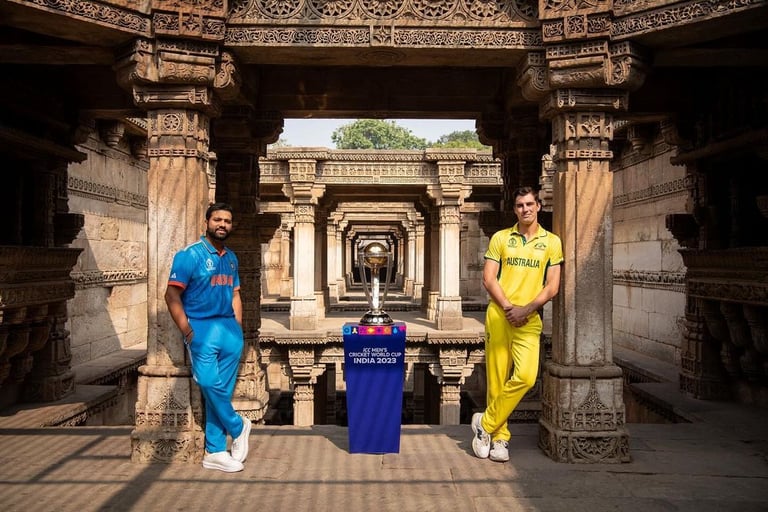
The recent World tournaments that were played in this format were the 2025 Champions Trophy and the 2023 World Cup, which saw huge crowds, especially the World Cup 2023 in the Indian subcontinent. India is a powerhouse when it comes to celebrating the game of Cricket. It really blends well with the culture of Indians. The 2023 World Cup was celebrated in India like a festival, but India’s unfortunate heartbreak in the tournament’s final left several hearts broken. If the outcome had been different, we probably wouldn’t be discussing ways to save this format so extensively, because Indians would have relished the victory as if kings of the past had won a battle against an invading opponent on their own territory. But we can only accept facts and move on.
Being an Indian who grew up watching an exquisite top-order in Rohit Sharma, Shikhar Dhawan and Virat Kohli, who so often batted through the entire 50 overs for India, accepting the changes in the format is challenging. As an aspiring cricketer inspired by the giants of our era growing up, MS Dhoni & Virat Kohli, ODIs will always retain a top priority in my memories. The changes one couldn’t even imagine are now becoming reality, and if we look at how things have been progressing, ODIs do seem to be in danger. Still, I hope the format can retain its quality and continue to carry the essence of this beautiful game.
So, IS ODI CRICKET PAST ITS PRIME?
What do you think?